 Paso FusionTalk to us
S3 · FINE-TUNING & TRAINING · GPU CLOUD
Model Fine-Tuning and Training Cluster Solutions
Matching model training tasks across parameter sizes, iteration cycles, and data ingestion throughput with global and Asia-Pacific upstream GPU clusters, accompanied by rigorous interconnect, storage, and runtime validation.
Training Workloads and Cluster Sizing
Training requirements span lightweight LoRA adaptation, full-parameter instruction tuning, domain continued pre-training, and reinforcement learning post-training. Each workload establishes unique demands on GPU memory, compute density, and cluster reservation windows.
Compute requirements for fine-tuning and training are jointly determined by specific model architectures, compute precision, and training strategies; single-machine single-card, single-machine multi-card, or multi-node clusters are evaluated and configured based on actual workloads, clarifying node quantities, per-card GPU memory specifications, and estimated training duration during project initiation.
GPU Memory, Interconnect Topology, and Fabric Validation
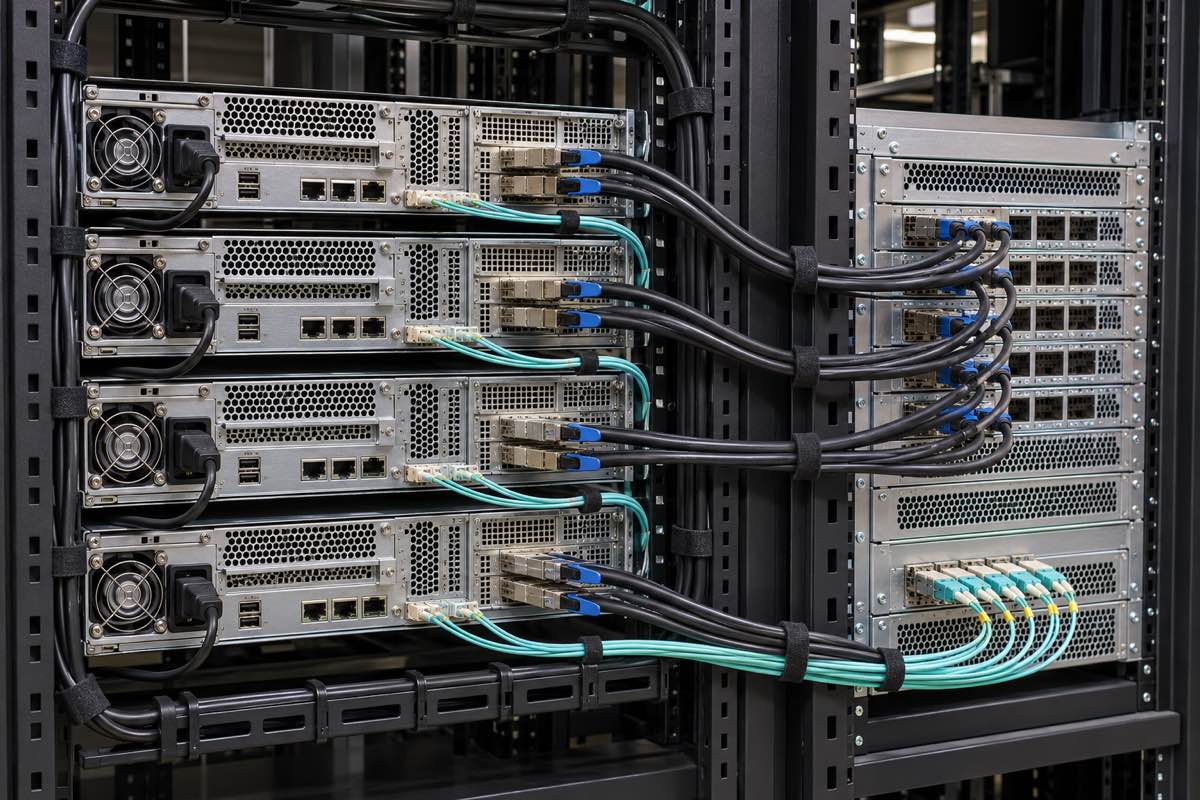
Scaling efficiency in multi-node distributed training depends on intra-node and inter-node interconnect performance; engineering assessments verify candidate upstream clusters item by item, covering network interface card specifications, network topology, bandwidth oversubscription ratios, and collective communication library compatibility.
While non-blocking fabrics remain critical for large-scale synchronous runs, they are not universally required across all fine-tuning scenarios. Before lease finalization and delivery, multi-node communication benchmarks and step-time benchmarks are conducted within defined scopes rather than relying on unverified vendor datasheets.
Datasets, Storage Architecture, and Checkpointing
If a training cluster lacks matching storage throughput, compute capacity can easily sit idle during data loading and checkpoint writing stages; solutions plan local high-speed caching or shared parallel storage based on dataset volume, file fragmentation levels, and read patterns.
For long-duration training tasks, checkpoint save frequency, remote backup paths, and failure recovery procedures are planned in parallel, while calculating cross-border or cross-cloud network transfer costs for training set migration in and resultant weight migration out.
Lease Terms, Resource Availability, and Delivery
High-density training clusters remain subject to regional upstream supply schedules and production batches, supporting short-term burst allocations or medium-to-long-term reserved instances aligned with project timelines.
Specific server availability, whole-rack allocations, and same-availability-zone topologies are confirmed on a project basis, with lease terms, delivery milestones, and formal acceptance criteria defined in commercial agreements.
Training Environments and Support Boundaries
Deliverables cover cluster hardware topology descriptions, driver and distributed communication environment verification records, storage mount configurations, and cluster handover checklists; during training, upstream platforms undertake infrastructure operational support, while Paso Fusion provides resource coordination, environment troubleshooting assistance, and lease transition support.
Plan training through acceptance
- 1
Validate a trial workload
Confirm model, dataset access and communication baseline within available trial resources.
Output Environment record and test criteria
- 2
Execute training
Coordinate the rental term, delivery lead time, change window and checkpoint schedule.
Output Run records, changes and checkpoint inventory
- 3
Accept checkpoints and release resources
Verify recovery materials and output transfer, then release resources under project terms.
Output Acceptance record and handover checklist